Little Engineers at Work: How Pre-K Children Build More Than Structures
“This is the day the Lord has made; let us rejoice and be glad in it.” — Psalm 118:24
There is something special about watching young children create.
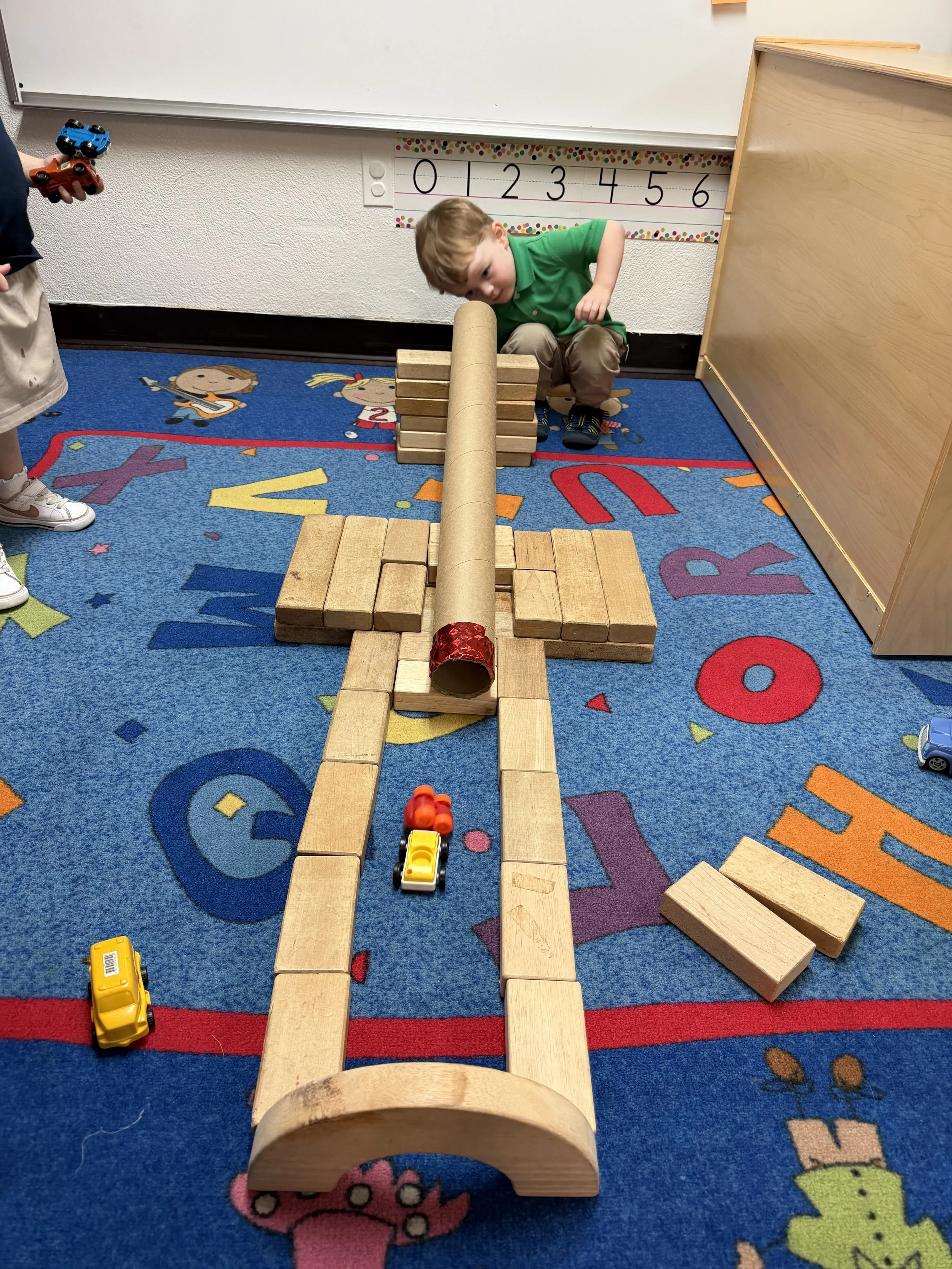
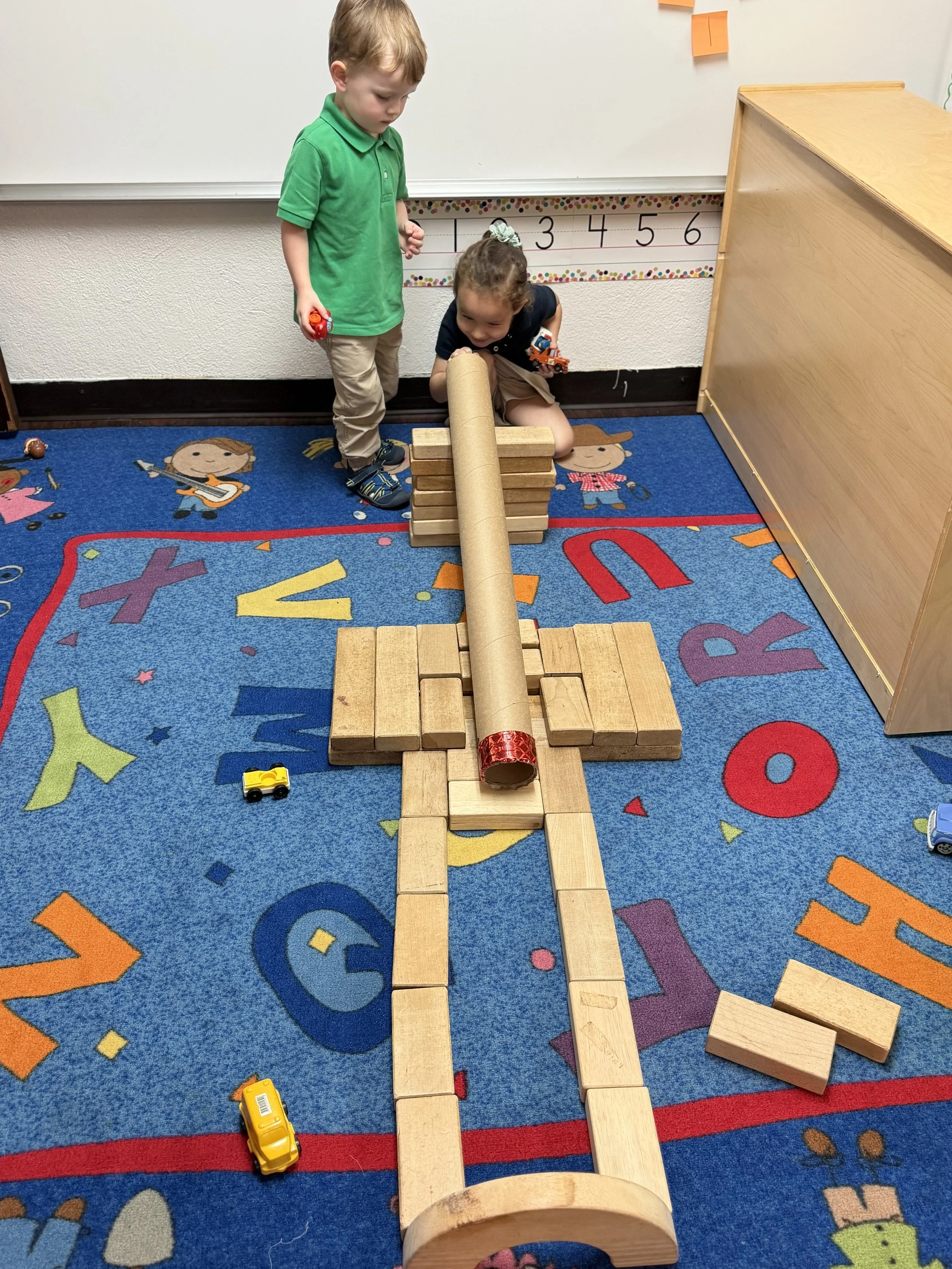
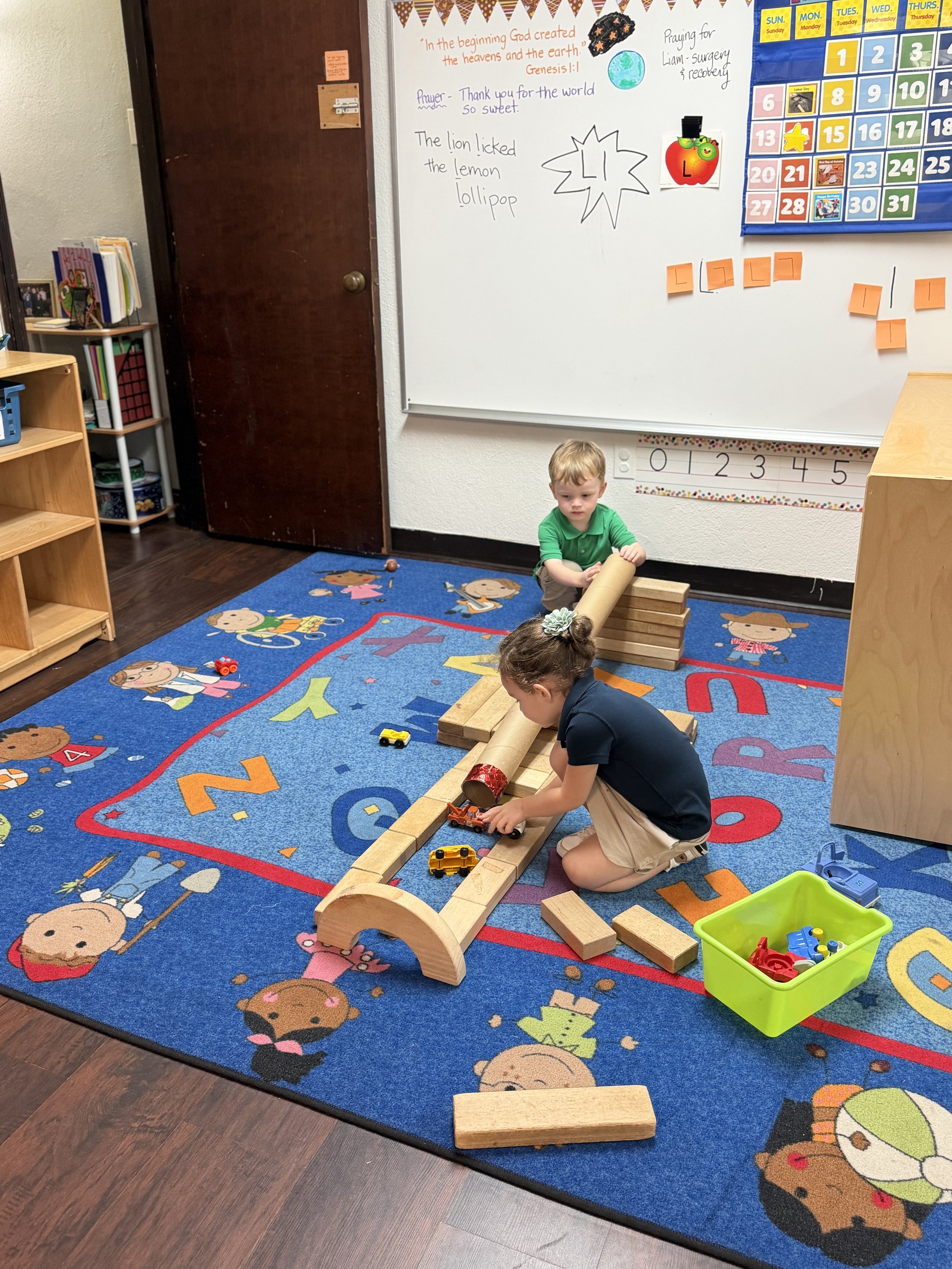
At first glance, these pictures may simply look like children playing with wooden blocks and toy cars. But when we take a closer look, we see something much bigger happening. We see young engineers at work.
In our Pre-K classroom, children are learning through hands-on experiences that encourage them to explore, experiment, problem-solve, and create. What looks like play is actually building a strong foundation for future learning in STEM—science, technology, engineering, and mathematics.
From Blocks to Engineering
Look closely at what these children are doing.
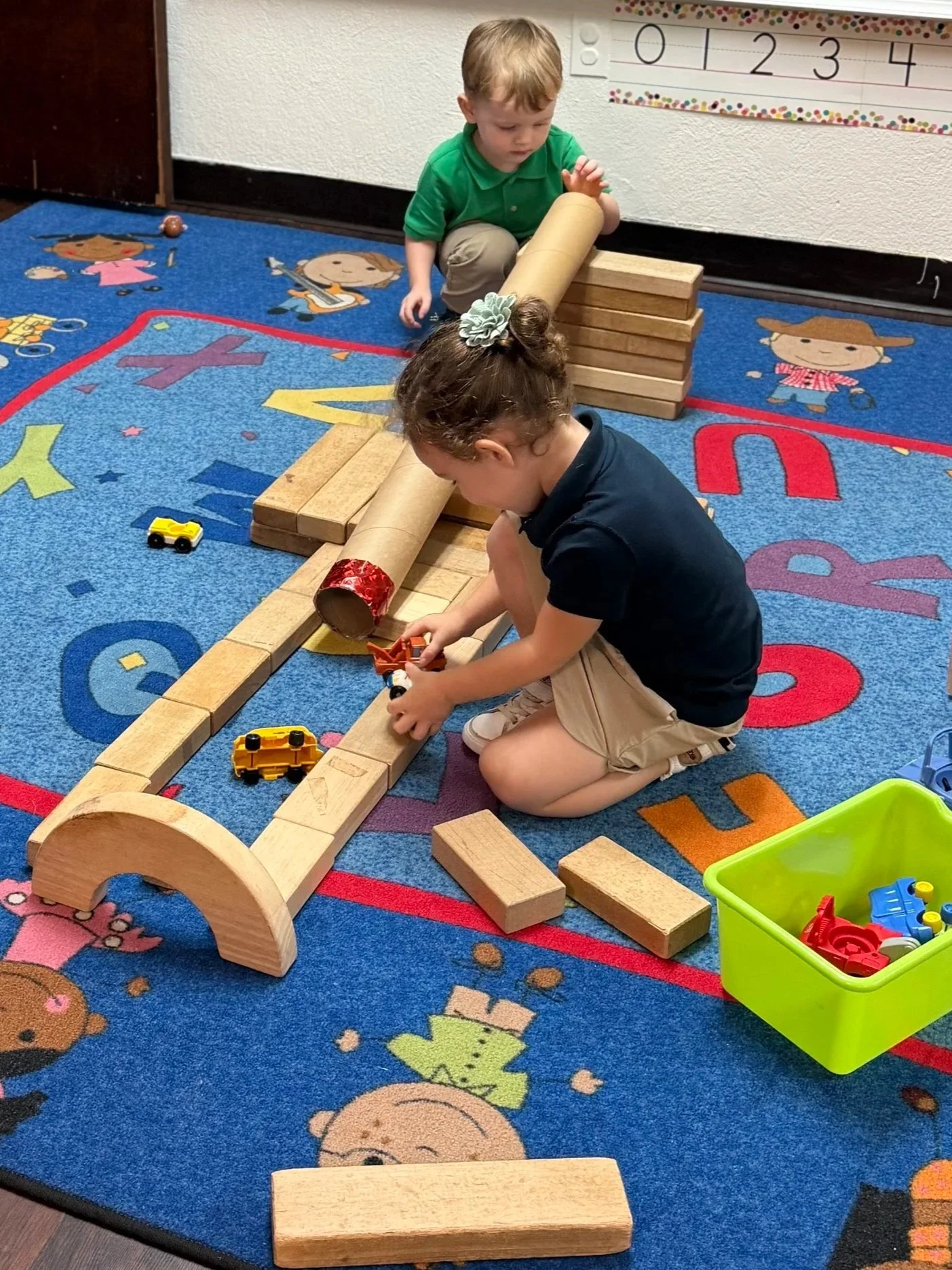
They are constructing a roadway or bridge-like structure using wooden blocks and a cardboard tube. They have to think about where each piece belongs, how to balance the materials, and how to make the structure stable enough for their vehicles.
Then comes the most important part: testing their ideas.
Does the car move through the structure?
Does the bridge stay balanced?
What happens if a block is moved?
What needs to be changed?
These are the beginnings of the engineering design process.
Children naturally learn through a cycle of:
Imagine → Plan → Build → Test → Change → Try Again
That process doesn't need to begin with complicated equipment or worksheets. It can begin right on the classroom floor with a basket of blocks and a child's imagination.
Problem-Solving in Action
One of the most valuable things happening during this type of play is problem-solving.
Children encounter challenges, and instead of immediately being given the answer, they have opportunities to figure things out for themselves.
They learn that when something doesn't work, they can make a change.
They learn to ask questions.
They learn to observe.
They learn to try another approach.
And perhaps most importantly, they begin developing the confidence to say:
“Let me try again.”
That mindset is an important part of learning—not only in Pre-K, but throughout life.
Learning Through Collaboration
There is also another important lesson happening in these pictures: collaboration.
When children build together, they have opportunities to share materials, communicate their ideas, watch what their classmates are doing, and contribute to a shared creation.
One child may have an idea about where a block should go. Another may discover how to make the structure stronger. Another may be focused on testing the cars.
Together, they are learning that sometimes solving a problem takes more than one idea.
Building More Than a Structure
The wooden blocks are only the materials.
The real construction is happening inside the children's minds.
Through this experience, children are developing:
• Critical-thinking skills
• Engineering and design concepts
• Cause-and-effect understanding
• Spatial awareness
• Fine-motor skills
• Collaboration and communication
• Creativity and imagination
• Persistence and confidence
This is why play is such an important part of early childhood education.
When children have opportunities to build, create, test, and explore, they aren't simply keeping busy. They are developing the skills they will use as learners for years to come.
Our Little Engineers Are Just Getting Started
As educators, we have the privilege of creating environments where children can be curious and where their ideas matter.
A simple pile of blocks can become a bridge.
A cardboard tube can become part of a transportation system.
A toy car can become a tool for testing an idea.
And a classroom floor can become an engineering laboratory.
Today, they are building with blocks. Tomorrow, they may be building solutions to much bigger problems.
So let's celebrate these little engineers, not because they built a perfect structure, but because they were willing to wonder, create, test, problem-solve, and try again.
That is learning.
That is growth.
And that is the beauty of Pre-K at RCS.
Call today to schedule a tour!