Social and Emotional Readiness.
Why Learning Centers Matter: The Power of Play in Early Education
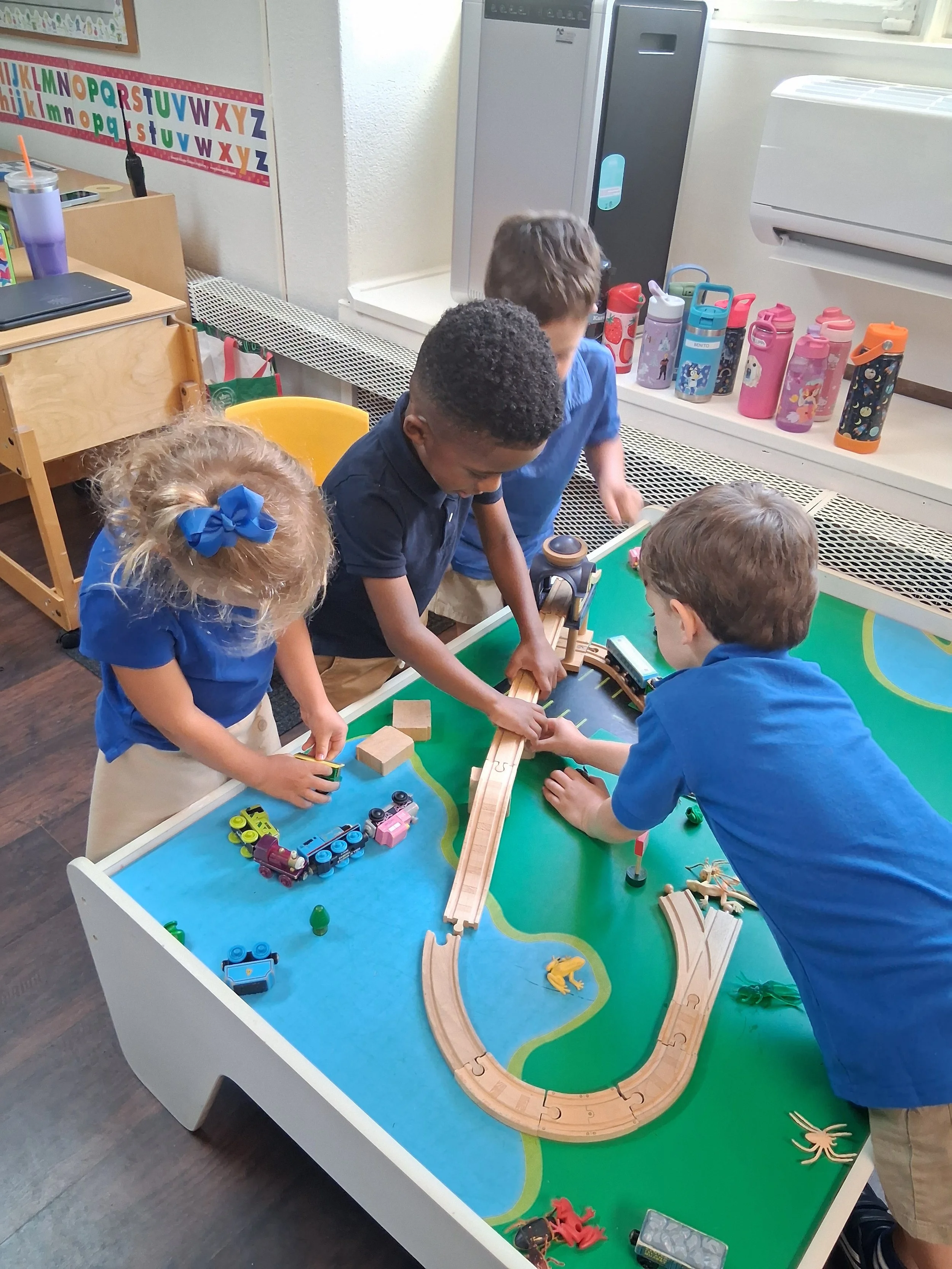
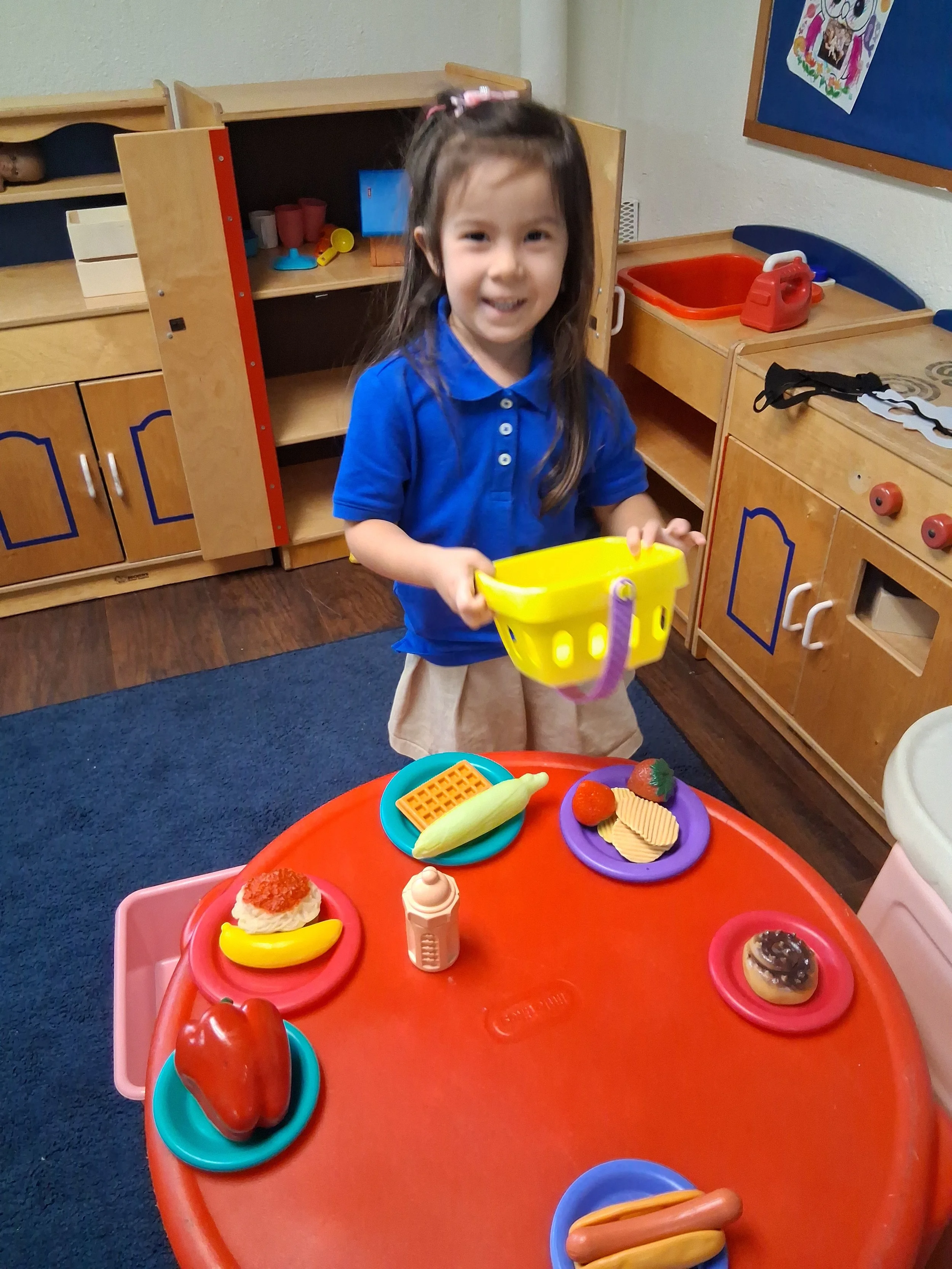
When you walk into our classroom during center time, you are greeted by a room filled with energy, focus, and joy. You might see children carefully designing intricate train tracks across a activity table, solving brightly colored matching games, or whipping up a pretend feast complete with waffles, hot dogs, and berries in the play kitchen.
To a casual observer, it looks like pure fun and it certainly is! But behind every smile, shared toy, and imaginary game lies a carefully planned environment where essential early childhood learning is continuously taking place. Learning centers are dedicated areas within the classroom designed around specific types of play, allowing children to guide their own discovery while developing foundational skills.
Key Benefits of Center-Based Learning
1. Problem Solving & Critical Thinking
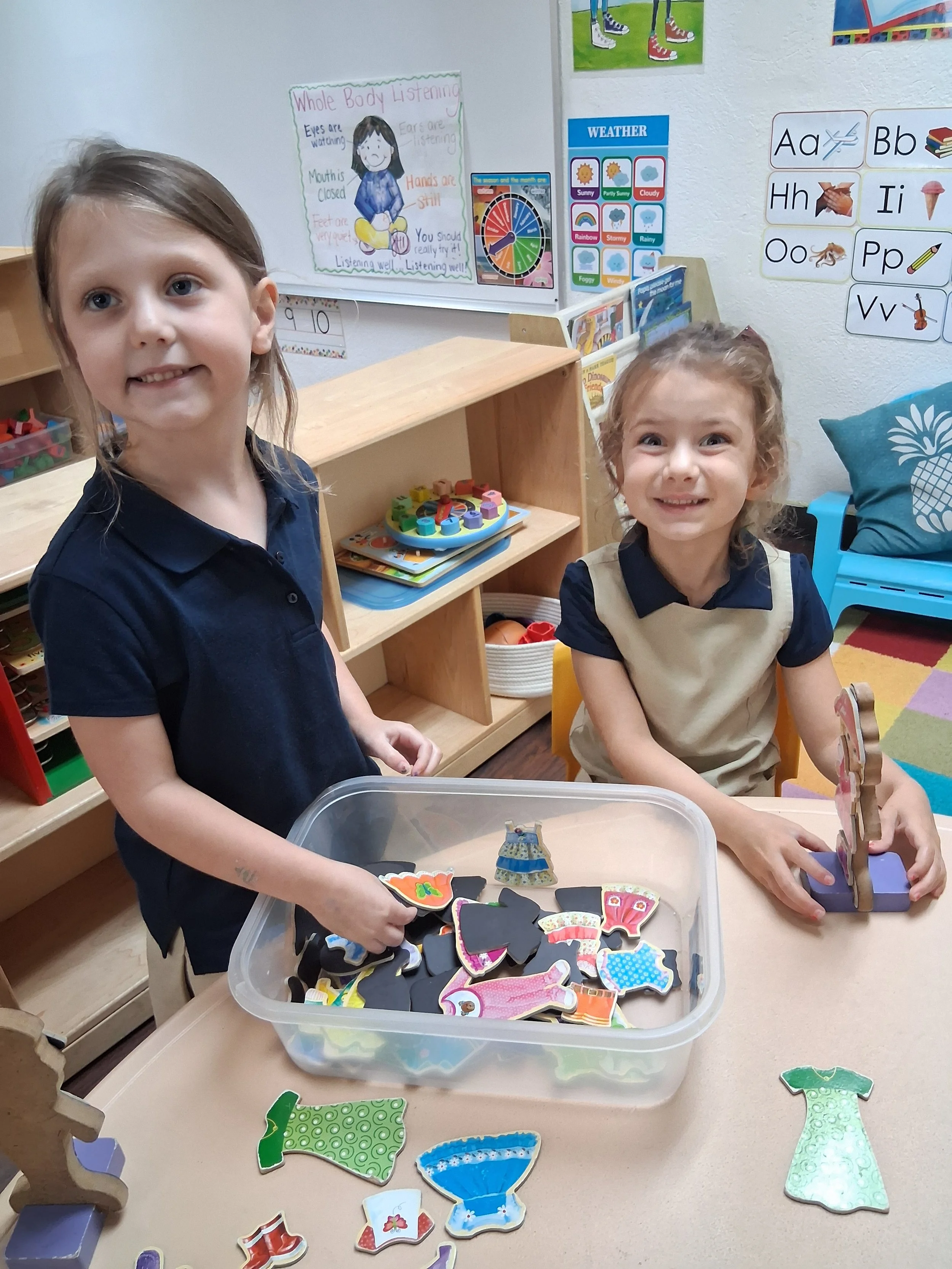
Whether fitting together puzzle pieces featuring favorite characters or figuring out how to connect wooden track pieces into a working circuit, play naturally presents young learners with real-world problems. As children experiment, they test ideas, assess spatial relationships, learn from trial and error, and experience the satisfaction of finding a working solution on their own.
2. Fine Motor & Pre-Writing Skill Development
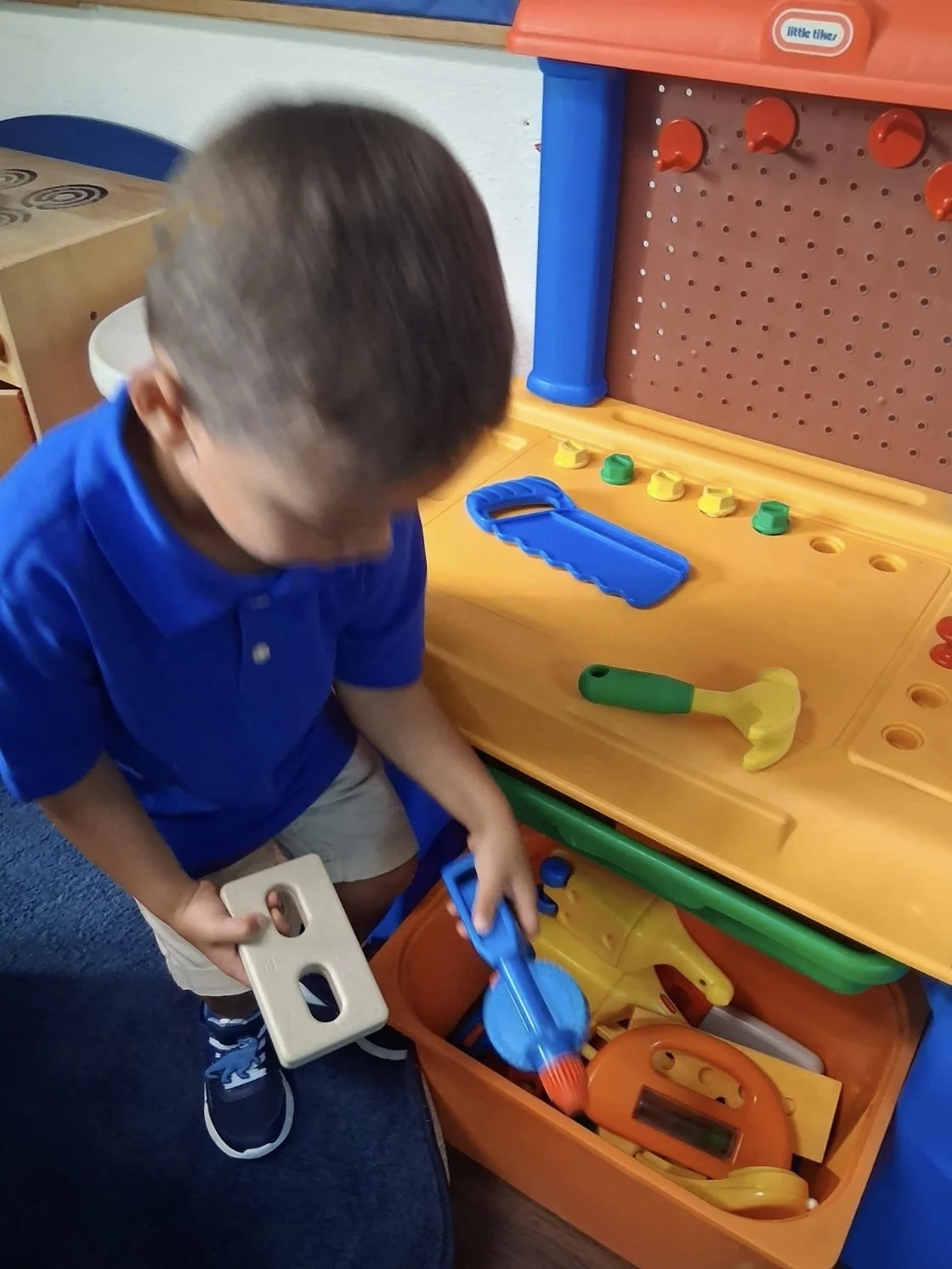
Before children pick up a pencil to write, they need to build muscle strength, dexterity, and hand-eye coordination. Handling small manipulative items such as placing magnetic outfits onto character dolls, stacking colored counting blocks, turning toy tools, or placing cookie shapes into matching slots—strengthens the tiny muscles in their fingers and hands necessary for future writing success.
3. Social, Emotional, & Language Growth
Sharing space at a center encourages rich peer interactions. When children work side-by-side at a sensory station, table, or carpet, they practice vital life skills: waiting their turn, communicating their thoughts, listening to peers, and navigating collaborative decisions. Dramatic play centers, like our pretend kitchen, give children a natural environment to expand their vocabulary and act out scenarios from daily life.
4. Independence, Confidence, & Choice
In a structured learning center setup, children are given the freedom to choose their activities based on interest and curiosity. Making independent choices boosts their confidence, fosters self-regulation, and transforms learning from a passive experience into an active, self-directed journey.
Nurturing Lifelong Learners
Our learning centers are far more than just play corners, they are dynamic spaces where curiosity meets intentional education. By providing a rich balance of structured games, open-ended materials, and imaginative play, we empower young minds to explore at their own pace and build a solid foundation for school readiness and lifelong learning.